
Operation NoVoice turns old Android phones into rootkits factory reset cannot remove
NoVoice Android malware headlines focus on 2.3 million Play Store downloads and phones that survive factory reset. These facts describe different populations. McAfee's March 2026 disclosure shows a modular rootkit that reached users through ordinary-looking cleaners and games. It then chained device-specific kernel exploits on phones whose security patches stopped before May 2021 (McAfee, 2026). If your patch date is current, the recovered exploit kit should not root your device. If you are running a 2019 budget phone that never saw another update, the reset button won't help. You need to reflash or replace the phone.
What is NoVoice and how did it reach Google Play?
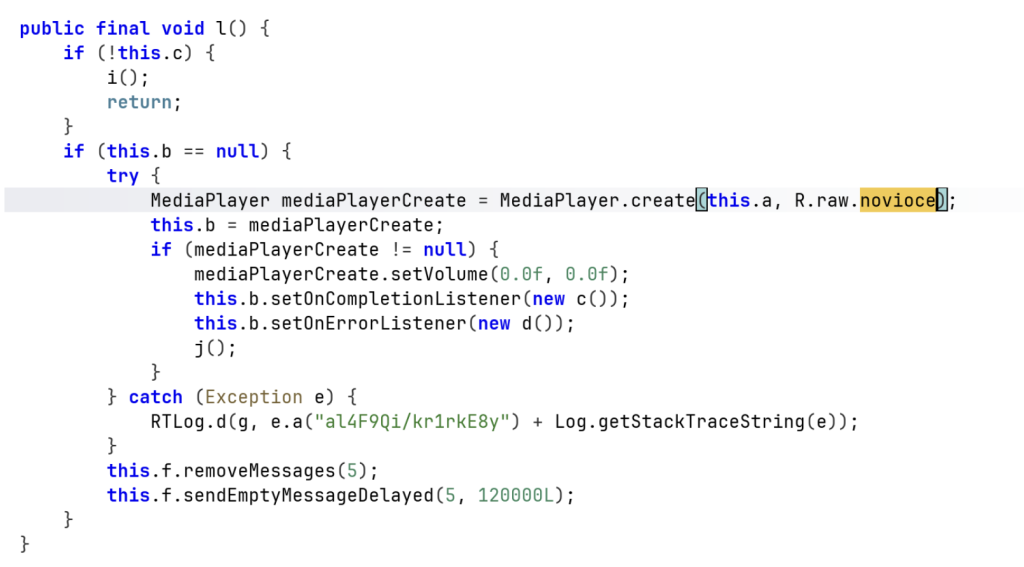
McAfee named the campaign Operation NoVoice. Researchers found more than 50 carrier apps on Google Play—photo utilities, cleaners, and casual games—with at least 2.3 million combined downloads (McAfee, 2026). The apps worked as advertised while a hidden stage profiled the device and contacted a command-and-control (C2) server for tailored exploits.
The initial payload hid inside a polyglot PNG: a real image with encrypted code appended after the PNG end marker. Store reviewers and users saw an ordinary asset file (McAfee, 2026). Malicious components masqueraded as tampered Facebook SDK classes. They blended into manifests that already listed Firebase, Google Analytics, and other common SDKs. No sideloading was required; opening the app was enough to start the chain.
Google removed the reported apps after McAfee disclosed through the App Defense Alliance. A Google spokesperson told BleepingComputer that Play Protect removes them and blocks new installs (BleepingComputer, 2026). Store cleanup helps, but it’s too late for anyone who already ran the dropper on a vulnerable build.
Who is actually at risk?
Risk depends on your security patch level, not just where you get your apps. McAfee recovered 22 exploit binaries from the C2 server. These targeted kernel and GPU driver flaws patched between 2016 and 2021. Devices at 2021-05-01 or later are not susceptible to those exploits (McAfee, 2026). Google repeated that line in its statement to BleepingComputer (BleepingComputer, 2026).
Infection heat maps skew toward Nigeria, Ethiopia, Algeria, India, and Kenya—markets where budget hardware and stale Android versions are common (McAfee, 2026). Exploit brokers target old kernels still in the field, not flagship phones with monthly patches.
| Your situation | Default call |
|---|---|
| Security patch May 2021 or newer | Low root risk from recovered exploits; delete any flagged apps; keep updates on |
| Patch before May 2021, still on OEM support | Treat root as plausible if you installed utility/game apps from unknown publishers; reflash if you cannot verify cleanliness |
| Patch before May 2021, no more OEM updates | Assume persistence if infected; reflash with stock firmware or replace the device |
| Unsure which apps were installed | Check Play Protect history and cross-reference McAfee's carrier list; rotate passwords for messaging and banking |
Play Protect and store review are response layers. They did not stop 50 apps from sitting in Play long enough to log millions of downloads. This matches other Google trust issues, including how much discovery traffic publishers still receive from search products after AI summaries ship (Google AI search editorial).
Why factory reset fails on compromised old phones
On vulnerable devices, NoVoice is harder to remove than standard adware. The installer replaces libandroid_runtime.so and libmedia_jni.so with hook wrappers. Every app then loads attacker code at boot via the Zygote process (McAfee, 2026). A bytecode patcher adds a second persistence layer in framework files. A watchdog daemon rechecks the installation every 60 seconds, reinstalls missing pieces, and can force a reboot if repair fails (McAfee, 2026).
Because the rootkit hits the system partition, a factory reset wipes user data but leaves the malicious files intact. McAfee is explicit: only reflashing with clean manufacturer firmware fully restores the device (McAfee, 2026). On Android 7 and older hardware that stopped receiving security updates by September 2021, that persistence is especially hard to escape (McAfee, 2026).
This is the "undeletable" case headlines mention. It is real, but rare. Treating every Android owner as equally exposed misstates the patch-date line Google and McAfee both cite.
What the malware does after it roots the phone
Once rooted, the framework is a delivery pipe. McAfee describes a plugin system that checks in every 60 seconds and can push new tasks into any app with network access (McAfee, 2026). The one payload researchers fully recovered targets WhatsApp. It copies encrypted Signal protocol databases, registration IDs, and local keys, then uploads them through layered encryption to attacker infrastructure (McAfee, 2026). Session cloning lets an attacker read messages from another device without the victim's phone showing a normal "linked device" warning.
McAfee warned the C2 is still active and the WhatsApp task might be just the start (McAfee, 2026). The engineering mirrors earlier families such as Triada—shared system-property markers and the same core library replacement tactic appear in third-party summaries of McAfee's indicators (AWAKE, 2026). Supply-chain preinstalls are not required here; Play distribution plus exploitation reached similar persistence.
What headline metrics miss about mobile security
Download counts measure reach, not individual risk. Treating these numbers as a safety guarantee is like trusting an AI leaderboard to predict your app's real-world speed. Headline numbers hide a messy reality (why AI benchmarks mislead).
For NoVoice, the number that matters is under Settings → About phone → Software information → Android security patch level. If the date is on or after May 1, 2021, the published exploit kit McAfee tested should not grant root. If the date is older and you lived on free cleaner apps, the relevant metric is whether you can reflash—not how many millions of strangers downloaded sibling APKs.
What to do this week
Seven-day checks for Android owners:
- Read your patch date. Settings → About phone → Software information. Write down the security patch level.
- Audit installs. Open Play Store → Manage apps → Manage. Sort by recently installed. Remove utilities and games from publishers you do not recognize.
- Run a mobile scan. Use Play Protect plus a reputable mobile security app if you are on a stale patch level or you remember installing cleaner/game apps from the campaign window.
- Assume messaging exposure if rooted. If you suspect infection on an old phone, log out of WhatsApp, enable two-step verification, and watch for unknown linked devices.
- Plan reflash or replace. If the patch predates May 2021 and the OEM no longer ships updates, budget time for official firmware flash or a new device instead of another reset loop.
- Stop treating Play as proof. Prefer known publishers, read recent one-star reviews mentioning battery drain or odd network use, and skip "cleaner" apps on phones that already manage storage fine.
If your patch is current, NoVoice is a warning about old hardware, not an emergency for every phone. If your patch is six years old, the campaign is a forcing function: either flash clean firmware or stop storing secrets on that handset.
References
AWAKE. (2026). NoVoice. https://zahidaz.github.io/awake/malware/families/novoice/
BleepingComputer. (2026). 'NoVoice' Android malware on Google Play infected 2.3 million devices. https://www.bleepingcomputer.com/news/security/novoice-android-malware-on-google-play-infected-23-million-devices/
McAfee. (2026). Operation NoVoice: Android malware found in 50+ apps can hijack devices. https://www.mcafee.com/blogs/internet-security/operation-novoice-android-malware-mcafee-research/
McAfee. (2026). Operation NoVoice: Rootkit tells no tales. https://www.mcafee.com/blogs/other-blogs/mcafee-labs/new-research-operation-novoice-rootkit-malware-android/